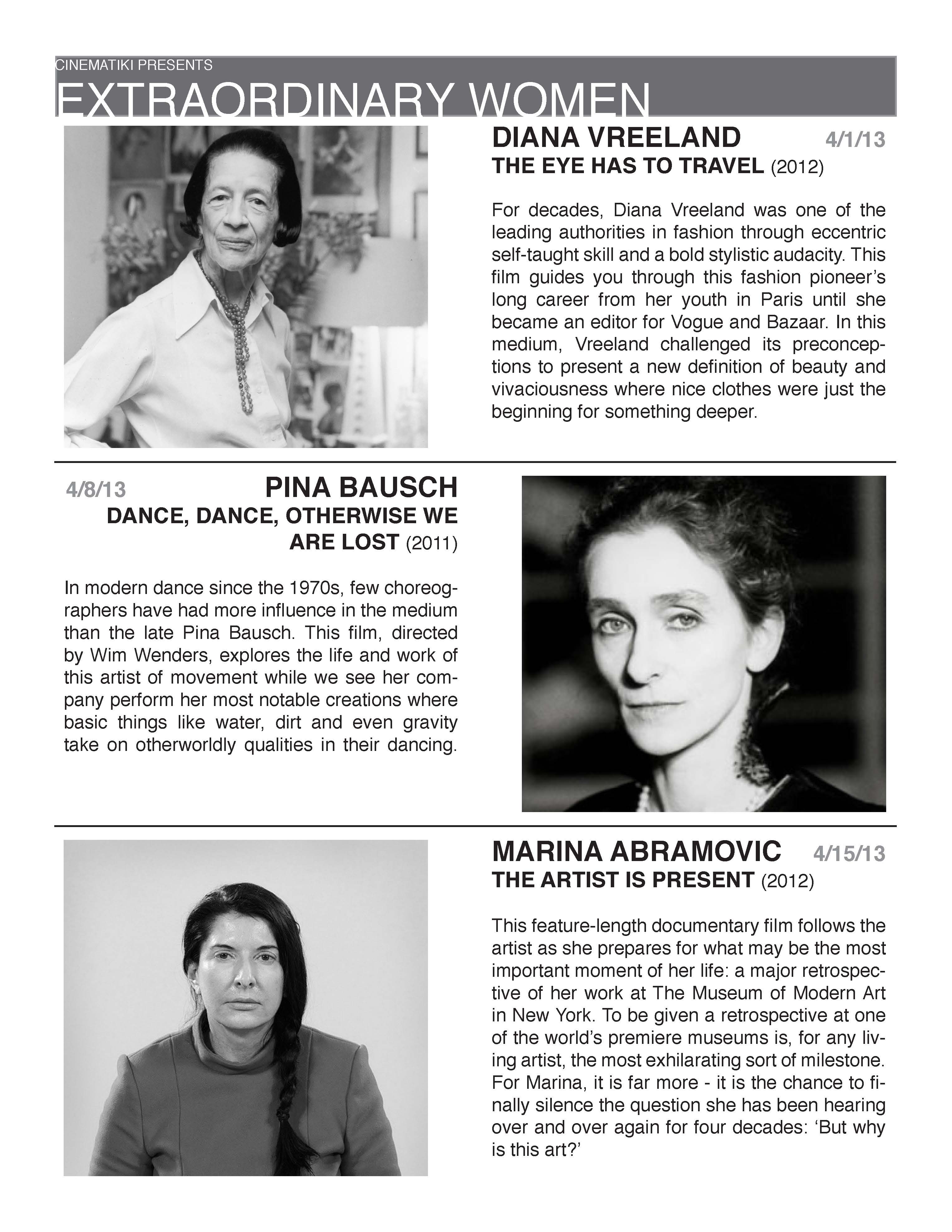
Anh and I found this after the film “The artist is present” and thought it was quite interesting.
Tom

Anh and I found this after the film “The artist is present” and thought it was quite interesting.
Tom

The film is set in a small town in France near the end of World War I. As the Imperial German Army retreats they booby trap the whole town to explode. The locals flee and, left to their own devices, a gaggle of cheerful lunatics escape the asylum and take over the town — thoroughly confusing the lone Scottish soldier who has been dispatched to defuse the bomb.
Thank you for showing up for our latest film in such a large number as to create a historical evening at the CINEMATIKI= where we had, in addition to our steady, weekly core audience, the pleasure of receiving a large contingent of screenwriters, actors and directors from L.A. and beyond that helped us examine, digest and critique “HABEMUS PAPAM” aka “WE HAVE A POPE”…the writer/director/actor NANNI MORETTI in his own prescient way anticipated by a couple of years some of the events that are taking place @ the Vatican right now with all the creative freedom and limitations of his own mind…i would have liked that he explored more of the real issues of the Catholic church in this 21st. century- or any other century- instead of addressing mainly the “parental deficit” of the new Pope and give MICHEL PICCOLI, an emblematic actor that we grew up watching in films like; Belle de Jour, La grand Bouffe, Les chose de la vie = the possibility to show us at this stage of his life and career something more than incipient senility…MORETTI‘s intentions as an intelligent writer/director were good and yet he created a giant mish-mash of styles that kept on taking us through different situations that never quite gel into a sustained symphony…his checkovian opus that started at the hotel where the fugitive Pope was staying had the surreal quality that added to the delirium of the theatrical representation towards the end with all the cardinals showing up @ the theatre ???…in contrast to the restaurant scenes w/ the chekovian players which were naturalistic as everyday life for a group of thespians…i found many of the scenes very pleasing as presentations of characters and situations and yet they were disjointed from the film as a whole; the different rides of the Pope in public transportation, the cardinals playing tournaments of cards and volleyball, their usage of medical drugs, the shrink and her family, etcetera…
it was a real treat to hear as part of the musical soundtrack of the film MERCEDES SOSA singing “TODO CAMBIA” in contrast to a imaginary and real world where nothing changes…
to be continued ?!?…
Posted in Uncategorized
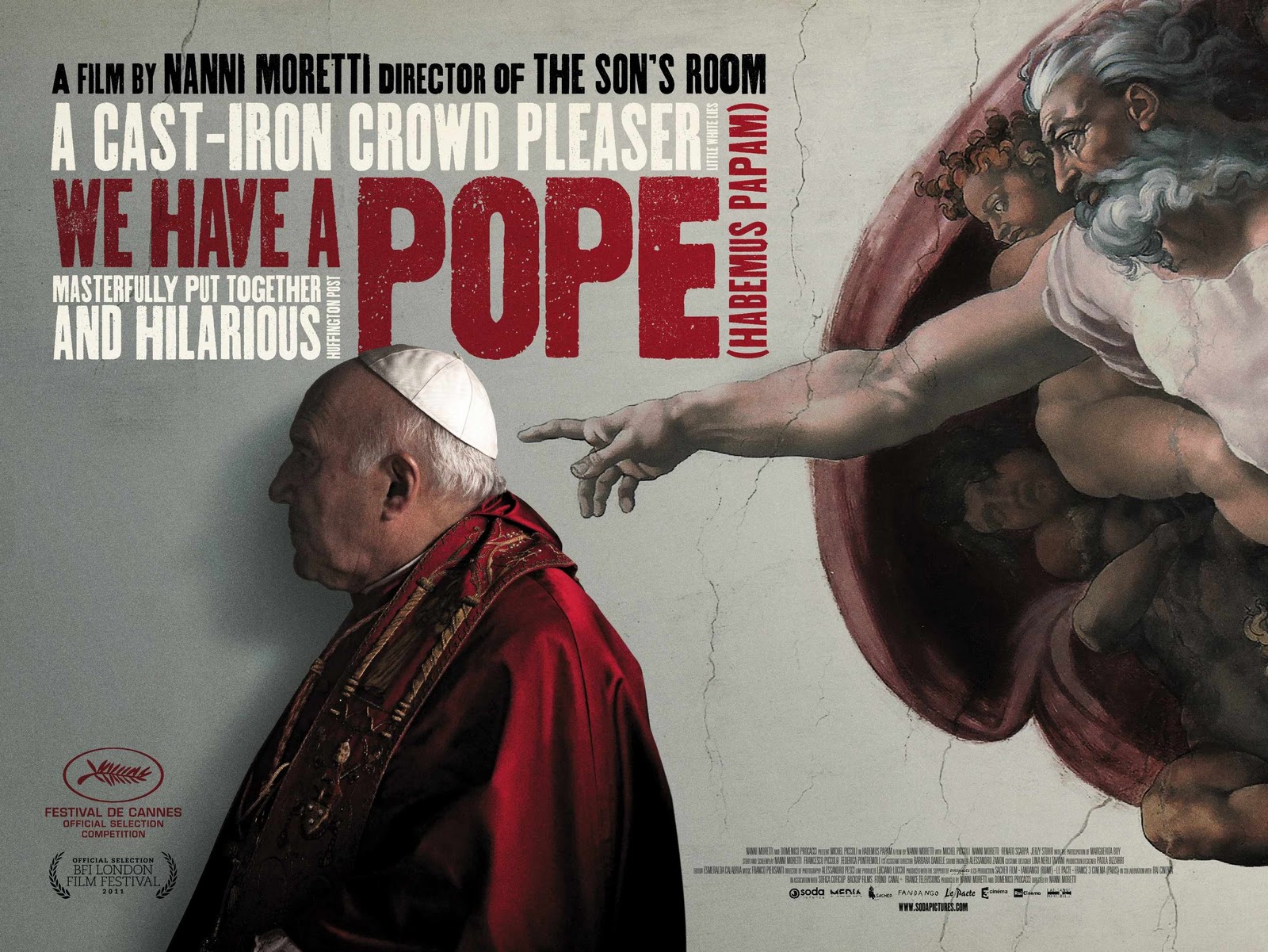 Nanni Moretti joins forces with the great French actor Michel Piccoli to tell the story of Melville, a cardinal who suddenly finds himself elected as the next Pope. Never the front runner and completely caught off guard, he panics as he’s presented to the faithful in St. Peter’s Square.
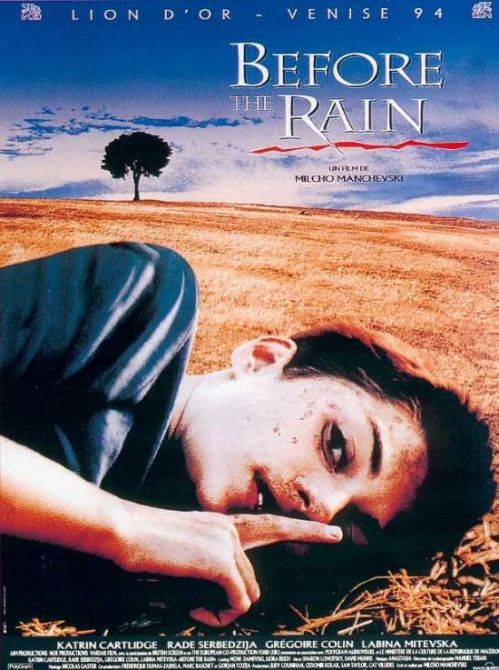
The circularity of violence seen in a story that circles on itself. The first film made in the newly independent Republic of Macedonia, Milcho Manchevski’s Before the Rain crosscuts the stories of an orthodox Christian monk, a British photo agent, and a native Macedonian war photographer to paint a portrait of simmering ethnic and religious hatred about to reach its boiling point. Made during the strife of the war-torn Balkan states in the nineties, this gripping triptych of love and violence is also a timeless evocation of the loss of pastoral innocence, and remains one of recent cinema’s most powerful laments on the futility of war. Awarded Golden Lion for Best Film at 1994 Venice Film Festival.
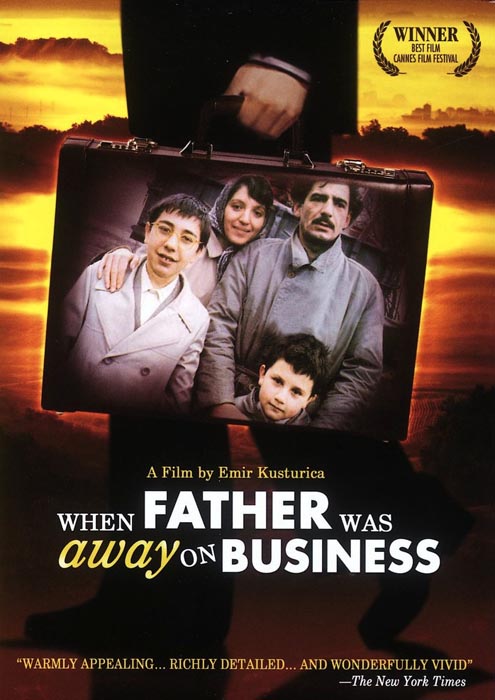
The Yugoslavian When Father Was Away on Business (Otac na Sluzbenoh Putu) takes place in the early 1950s. The title is a euphemism: because of the strained relationship between Yugoslavia and the USSR, various private citizens have disappeared in the middle of the night, accompanied by the police. A delightfully warm comedy, seen through the eyes of a six year old boy who thinks his father is away on business, when in actuality he’s been sent to the mines for having an affair. Nominated for the 1985 Academy Award for Best Foreign Language Film.
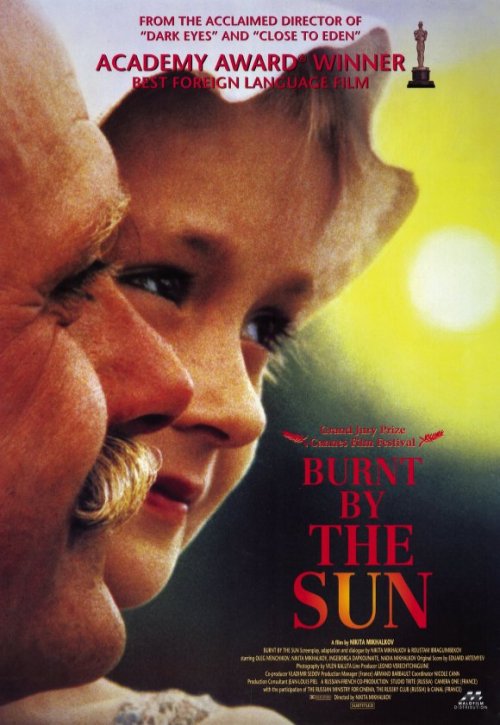
“Burnt by the Sun” depicts the story of a senior Red Army officer and his family during the Great Purge of the late 1930s in the Stalinist Soviet Union. Mikhalkov’s powerful portrait of viciousness during the Stalin era won the 1994 Oscar for Best Foreign Film. The film also received the Grand Prize at the 1994 Cannes Film Festival among many other honors.
Reflecting on God’s Comedy, I definitely plan to archive the scene where Joao de Deus directs the young woman in the swim suit as she swims on his desk. I find that my favorite part of the film and perhaps the most memorable scene in any film I’ve seen. I can only speak of my own gut reaction to the film as a whole. I found the film extremely entertaining: a film about an obsessive slightly perverted man with a passion for poetry, music, dance, literature, swimming and girls..? Count me in! I loved his movements. I loved the way he was effected by classical music. I loved his concern with cleanliness. I enjoyed his ability to archive an organize and label his bizarre collection of women’s pubic hairs (“God shave the Queen”)
Yes, I realize we are speaking about a lot of things that are not politically correct but I must remind you that the history of art is full of such things. Think Duchamp, Man Ray, Luis Buñuel, Dali, Polanski, Hitchcock, Bertolucci, Nabokov, Kubrick, etc.
Remember it is just a film. It is director Monteiro as Joao de Deus exploring parts of his shadow, pushing boundaries and having fun making art.
Tom Sewell
Posted in Uncategorized
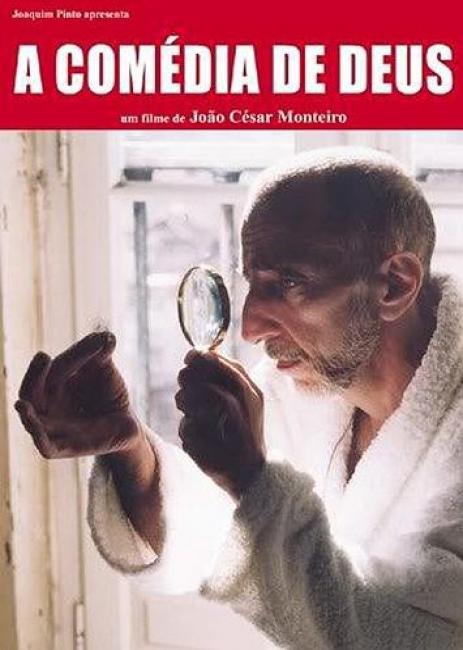
João de Deus is the manager of an ice-cream shop owned by an ex-prostitute, Paraíso dos Gelados (Ice-Cream Paradise). Through a unmoved desire of perfection, he seeks, through cleansing and purity to attain heaven. The surrounding world, however, does not comply with his decaying vision of lust and decay as a way of achieving his purpose.
Dryly comic, disturbing and deservedly honored with the Venice Film Festival’s Silver Lion when it was released, God’s Comedy is one of the most flagrantly perverse films you’re likely to see.
 Cinematiki Maui